Landing at Salzburg Airport (SZG)
Salzburg is the closest gateway to Kitzbühel — 80 km and about 1 hour 15 minutes by road. It is a compact airport, which works in your favour on a ski Saturday: you are through the arrivals hall and into the car quickly.
Meeting your hoppa driver
Your driver waits in the arrivals hall, holding a name board with your surname. Your e-ticket names the meeting point, and 24 hours before pickup hoppa sends a final SMS or WhatsApp with the exact spot and your driver's contact details.
- Airport arrivals carry 60 minutes of free waiting after your scheduled landing, plus a 30 minute buffer on international flights
- Your driver tracks the inbound flight, so a delay moves the pickup rather than losing it
- If you cannot see them, stay where you are and call the number on your e-ticket — hoppa answers in an average of 11 seconds, and it is a person, not a chatbot
Tip: save the emergency number from your e-ticket to your phone before you leave the terminal. If you are held up at the baggage belt or at passport control, one call lets the driver know you are still inside.
Baggage & ski gear
Skis and boards are checked in as special baggage and come off a designated oversized belt rather than the standard carousel. Follow the signed oversized baggage area and allow extra time for it.
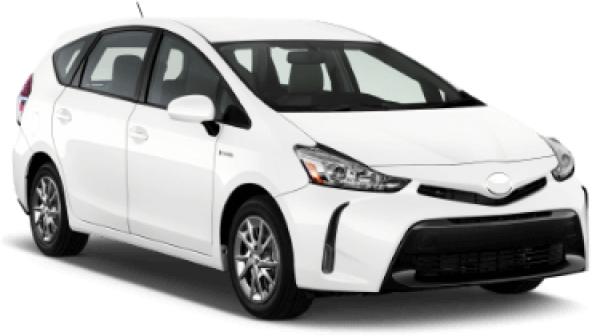
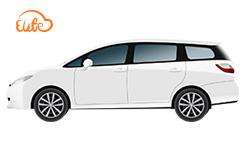
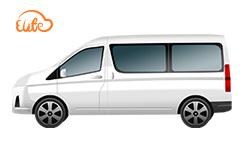
Tell hoppa how many ski, board and boot bags you are carrying when you book, so the vehicle sent has the space. The standard allowance is one bag per person up to 24 inches, and anything longer counts as two pieces.
Landing at Innsbruck or Munich instead
Kitzbühel is served by three airports and the drives are not comparable. Book the transfer for the airport you are actually landing at:
- Salzburg (SZG) — 80 km, about 1 hr 15 min. The shortest run.
- Innsbruck (INN) — 95 km, about 1 hr 30 min. Smaller airport, useful for regional European flights.
- Munich (MUC) — 160 km, about 2 hr, crossing the German border. The widest choice of UK flights.
Munich city centre is closer than Munich Airport, at roughly 130 km. If you are starting in the city rather than at the terminal, price that leg rather than assuming the airport figure.
Currency & cards
Austria and Germany both use the euro, so there is nothing to change en route whichever gateway you fly into. Cards are widely accepted, but carry some cash for mountain huts and small bars.
Salzburg to Kitzbühel — the 80 km, 1 hr 15 min run
Kitzbühel sits about 80 km from Salzburg Airport in the Kitzbüheler Alpen, in the Tyrol. The roads in are main routes and they are cleared quickly, but they are alpine roads in winter and they behave like one.
What the drive actually looks like
- About 1 hour 15 minutes in normal winter conditions, door to door
- Your driver takes you from arrivals straight to your hotel, chalet or apartment — one leg, no changes
- Tolls, taxes and the driver's waiting time are already inside the fixed price
- Heavy snow can add time; hoppa's operators drive this road all winter and know when to leave earlier rather than turn back
Winter driving law: winter equipment is compulsory
Legal requirement: between 1 November and 15 April, vehicles in Austria must run winter tyres or carry snow chains in wintry conditions. hoppa vehicles are winter-equipped as standard. A hire car picked up across the border in Germany very often is not — and Austria also charges a motorway vignette for its autobahns and expressways, which a German hire car will not usually carry.
The Munich route crosses a border
If you are flying into Munich, the drive crosses into Austria on the way. It is a routine crossing inside the Schengen area, so there is no queue to plan around — but it does add distance. Munich is 160 km against Salzburg's 80 km, which is roughly an extra hour each way.
Two dates that change the journey
Hahnenkamm race week. The Streif downhill runs every January and Kitzbühel is at capacity for it. Book your transfer early for that week: local vehicle supply tightens well before the race, and it does not loosen again until the crowds leave.
Changeover Saturday. Almost every Tyrolean resort turns over on a Saturday, and the valley roads carry the whole week's arrivals and departures at once. A transfer that runs 1 hour 15 minutes midweek can take noticeably longer at peak changeover. Your fixed price does not change because of it.
Where in the valley are you staying?
Most visitors stay in Kitzbühel itself, but the transfer is the same drive either way and your driver takes you to the door:
- Kitzbühel — the medieval town centre at 762 m, with the lifts on its doorstep
- Kirchberg in Tirol — 7 km away, linked into the same ski area
Your first day on the mountain
Kitzbühel town sits at 762 m, and the lifts serve terrain up to around 2,000 m. The ski area covers more than 230 km of pistes, most of it intermediate — which is why mixed-ability groups get on so well here.
The KitzSki ski area
Kitzbühel and neighbouring Kirchberg in Tirol, 7 km down the road, form one linked area. Two mountains define it:
- The Hahnenkamm — the famous side, and home of the Streif, the downhill course raced every January
- The Kitzbüheler Horn — the other shoulder above the town, and where to head for a change of aspect
- More than 230 km of pistes, weighted towards intermediate terrain
- Lifts run up to around 2,000 m, so check the snow report before you travel early in the season — the town itself is low for an Alpine resort
Lift passes
Buy your pass online before you travel where you can, rather than queueing at a ticket window on changeover Saturday. Current tariffs and the resort's own snow report are published at kitzski.at — check them for your dates rather than relying on last season's figures.
Ski & snowboard hire
- Pre-booking hire online is usually cheaper than walking in, and it holds the kit for you
- Book boots early in peak weeks — fitting takes time, and Saturday afternoon is the busiest slot of the week
- Ask about delivery or fitting near your accommodation if you are carrying children's gear as well as your own
Ski schools & lessons
- Kitzbühel's ski schools run group and private lessons for adults and children, and English-language teaching is easy to find
- Book lessons before you travel for a peak week, for the same reason you book the transfer early
- The mostly intermediate terrain makes this a good place to move up a level rather than learn from scratch
Before you ski: mountain rescue in Austria is chargeable, and neither a UK GHIC nor an EHIC covers rescue costs or getting you home. Travel insurance with winter-sports cover is the one thing worth sorting before you leave, and it is worth checking whether off-piste is included.
Practical essentials for your stay
Money & cards
- Austria uses the euro, as does Germany — so there is nothing to change whichever gateway you fly into
- Cards are widely accepted in shops, bars and restaurants across the Tyrol
- Carry some cash anyway: mountain huts and smaller bars are the places most likely to want it
★ Health cover — read this one
Your UK GHIC or EHIC covers state healthcare in Austria, but not the mountain. It does not pay for mountain rescue, it does not pay for private clinics, and it does not get you home. Rescue in Austria is chargeable. Take comprehensive travel insurance with winter-sports and medical cover, and check the policy actually covers the terrain you intend to ski.
Emergency numbers
- 112 — the European emergency number, which works across Austria and Germany
- 140 — alpine and mountain rescue (Bergrettung)
- 144 — ambulance
- 133 — police
- 122 — fire brigade
Getting around once you are here
Kitzbühel is unusual for a ski resort in having its own railway, which is useful for day trips even when it is not the way you arrive:
- Kitzbühel Hauptbahnhof — in the town itself
- Kitzbühel Hahnenkamm — a second stop, closer to the slopes
- Kirchberg in Tirol — 7 km away and on the same line
- From Salzburg the service is a regional one running roughly every two hours; from Munich you change at Wörgl
Weather & snow reports
- kitzski.at — the resort's own live piste, lift and snow information
- snow-forecast.com — altitude-specific forecasts, worth checking against the town's 762 m base
Language, tipping & local etiquette
- German is the language, and English is widely spoken in the resort and the hotels
- Tipping is not obligatory. Rounding up, or 5–10% for good service, is normal and appreciated
- A greeting on entering a shop goes a long way — "Grüß Gott" is the standard one in Austria
hoppa 24/7 support
The 24-hour hoppa support number is printed on your e-ticket. Use it for any transfer-day question, a change of pickup time, or anything that comes up during your holiday. Calls are answered in an average of 11 seconds, with a 99.7% answer rate.